World War I
A Moveable FeastWorld War I is a continuing presence in these Paris recollections rather than a single narrated battle. It shapes the narrator’s judgments about trust and generational labels, supplies concrete memories of wartime transport, and becomes an unspoken subject in a story about coming home from war.
Wartime memory and its aftermath
The narrator recalls ambulance vehicles descending mountain roads with wounded aboard, their brakes failing under the strain until the drivers used low gears and finally reverse. He also remembers the last vehicles being driven empty over the mountainside so they could be replaced by larger Fiats with improved gearshifts and brakes. The memory gives the war a practical, mechanical aftermath: evacuation depended on vehicles that could be worn out by the work of carrying the wounded.
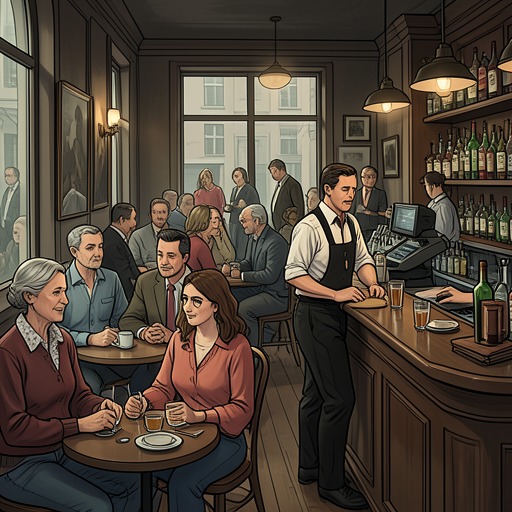
In postwar Paris, the war is also legible in the people who survived it. At the Closerie des Lilas, the narrator watches patrons who wear military decorations and have lost limbs or undergone facial reconstruction. He says that, in those days, people distrusted anyone who had not been in the war, though they did not completely trust one another either. The war thus establishes a bond of experience without guaranteeing solidarity; even a veteran such as Cendrars can be regarded with suspicion.
The argument over a lost generation
Gertrude Stein calls the young people around her a lost generation, repeating a garage keeper’s judgment. The narrator later thinks through that label while remembering wartime ambulance service and reflecting on discipline, egotism, and mental laziness. Rather than accept the phrase as a final diagnosis of the postwar young, he concludes that every generation has been lost by something and always will be. His response resists turning the war’s damage into an easy description of an entire age.
That resistance coexists with personal affection. Walking home, he recalls Stein’s warmth and decides to serve her and see that her work receives justice, even while rejecting her generational label. The episode presents the war not as a reason to sever relationships, but as part of the difficult background against which judgment, loyalty, and literary evaluation continue.
The war as an unspoken subject
The war reaches the narrator’s fiction by way of omission. While working at the Closerie des Lilas, he begins a story about returning from war, but there is no mention of the war in the story itself. He imagines that the river and the country must be made the following morning, and that the work of continuing the story is what matters. The subject is therefore present in its premise and absent from its explicit account: return, rather than battlefield description, carries the wartime experience into the writing.
This remembered war also informs the narrator’s sense of literary responsibility. He considers balancing Stein’s lost-generation phrase with Ecclesiastes in his first novel, then rejects the ease of the label while resolving to do justice to Stein’s work. World War I appears across these recollections as material that cannot be reduced to a slogan: it leaves physical traces, alters the terms of trust, and can shape a narrative even when the narrative does not name it.